Cheesecloth is one of those humble kitchen tools that, once discovered, becomes indispensable. Far more than just a fabric for making cheese, this versatile cotton mesh finds its way into countless culinary and crafting applications. Whether you're straining stocks, clarifying butter, making yogurt, or even creating holiday decorations, having the right cheesecloth on hand makes all the difference. But with terms like "Grade 100," "butter muslin," and "unbleached" floating around, how do you choose? This guide will walk you through the essentials.
Understanding Cheesecloth Grades: It's All About the Weave
The most critical factor in selecting a cheesecloth is its grade, which refers to the tightness of the weave. Grades typically range from 10 (very loose and open) to 100 (ultra-fine and dense). For most kitchen tasks, especially those involving fine straining, Grade 100 cheesecloth is the gold standard. Its tight weave, often called butter muslin, prevents even the tiniest solids from passing through, making it perfect for clarifying butter, making silky-smooth nut milks, and straining fine cheeses.
Products like the Cotton Farm Grade 100 XL Cheese Cloth exemplify this category. Described as "ultra-dense," it's the finest option available, ideal for serious cooks and cheesemakers. For smaller, more frequent tasks, a multi-pack like the 6-Pack Beige Cheesecloth or the High-Grade 100 Cheesecloth – 6-Pack offers convenience and value, ensuring you always have a clean piece ready.
Key Features to Look For in Quality Cheesecloth
Beyond grade, several features define a superior cotton cheesecloth:
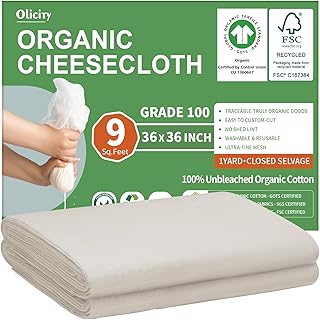
Material & Certification: Always opt for 100% cotton. Unbleached, natural cotton is preferred for food safety and environmental reasons, as it contains no chemical residues. For the eco-conscious, the Organic Cheese Cloths, GOTS Certified offer a premium, sustainably produced option.
Hemmed Edges: This might seem minor, but hemmed or finished edges are crucial. They prevent fraying, make the cloth more durable for multiple uses, and are easier to handle. Look for descriptions like "hemmed," "closed edges," or "lock-edged," as seen in the 6 Pcs Cheese Cloths with Hemmed Edge and the 12Pcs Reusable Cheese Cloths Hemmed 4 Edges.
Reusability: A good cheesecloth is not a single-use item. With proper care—rinsing in cold water immediately after use and laundering gently—a high-quality cloth can be used dozens of times. This makes products designed for reuse both economical and sustainable.
Versatile Uses in the Kitchen and Beyond
The primary use of cheesecloth is, of course, food straining. It's essential for cheese making, separating curds from whey for cheeses like paneer, ricotta, or farmer's cheese. It's also the secret to crystal-clear broths and consommés, as it removes all impurities. For holiday cooks, it's the traditional tool for cooking turkey, used to hold herbs and aromatics inside the bird.
But its utility extends further. It's a fantastic juicing cheesecloth for extracting every last drop of pulp-free juice. Bakers use it to drain yogurt for thicker Greek-style yogurt or to strain seeds from purees. Beyond the kitchen, it's a popular crafts fabric for ghost decorations, plant wrapping, and even as a gentle polishing cloth.
Making Your Choice: Bleached vs. Unbleached, Precut vs. Yardage
You'll often choose between bleached and unbleached cloth. Unbleached is natural in color and free from processing chemicals, making it a favorite for food grade cheesecloth. Bleached cloth, like the GoodCook Everyday 100% Cotton Cheesecloth, is bright white and may be preferred for crafts or visual presentation.
Convenience is another factor. Precut squares, such as the Precut Cheesecloth, 15 x 15'' 4 Pack or the Mostdream 10Pcs 20x20 Inch Precut Cheese Cloths, save time and mess. For large projects or if you like to cut your own sizes, buying by the yard or in larger pieces (like the 36x36 inch options) is more economical.
For a deep dive into all these considerations, check out our comprehensive Ultimate Guide to Cheesecloth. If you're considering a specific brand, our MAJESTIC CHEF Natural Cheesecloth Review provides hands-on insights.
In conclusion, investing in a high-quality, Grade 100 cheesecloth with hemmed edges is a decision your kitchen—and your crafts—will thank you for. It’s a simple tool that elevates everyday cooking, empowers homemade cheese and yogurt projects, and proves that the best kitchen essentials are often the most straightforward.